I have a bad memory. I have tried to build systems with that in mind.
For years I’ve captured thoughts in daily notes (Roam Research, Reflect) — 900 daily journals, plus 3000 pages of notes. The problem was never capture. It was retrieval, connection, maintenance that suits me.
I’m a designer. I’ve spent my career shaping products — understanding users, mapping flows, making interfaces that help people do things. But I couldn’t build software myself. I could sketch what something should be, but making it exist required engineers, sprints, priorities.
That changed when I started working with Claude Code.
The shift isn’t about AI doing the thinking
There’s a phrase I keep returning to: discomfort avoidance erodes competence. Modern systems monetize our desire to skip hard things. We outsource cooking, learning, thinking. Repeated avoidance trains incompetence.
The hard parts of my work are decisions under uncertainty. Which customer problem matters most. Whether this feature is solving the right job. When to kill something that’s not working. Those require sitting with ambiguity, talking to users, being wrong and adjusting. That discomfort is the work. I haven’t outsourced it — and I shouldn’t.
What I’ve outsourced is administrative upkeep. Scanning yesterday’s notes for commitments I made. Updating a watch list with what others owe me. Finding the connection between something I thought in March and a decision I’m facing now. These don’t require judgment. They require reliable memory and consistent follow-through — things I’m bad at.
Productive discomfort builds skill. Administrative friction just burns time.
Claude Code handles the friction. The discomfort stays mine.
Every day I run a review with Claude Code. It reads my daily notes, extracts commitments, and updates three lists:
- TODO (what I need to do now),
- LATER (ideas I’m not ready to commit to), and
- Watch list (what others owe me).
It knows my system, the rules live in a file it reads every time. No reminding. No overhead.
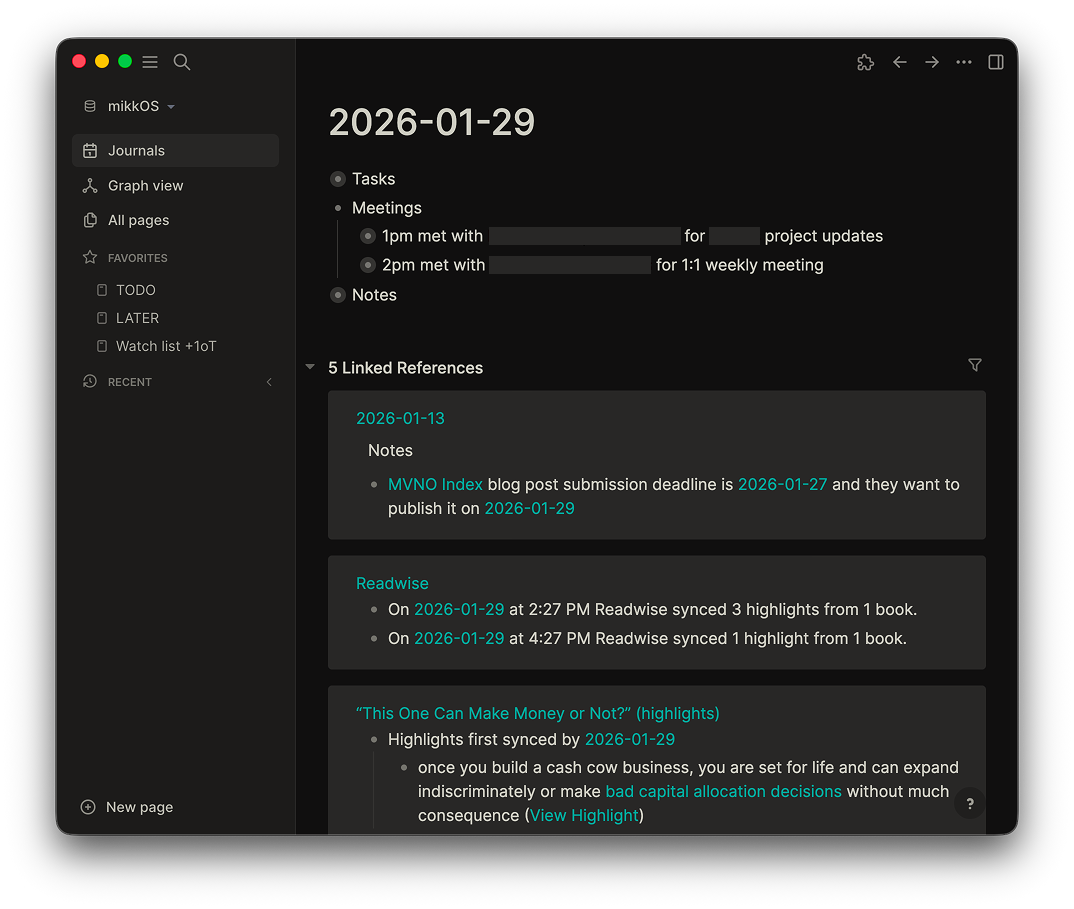
When I’m stuck on a product decision, I can think out loud and have something push back. Not generic advice. Claude Code has access to my principles, my goals, what I said I’d focus on. It keeps me honest about whether I’m working on what actually matters. That’s not avoiding discomfort. That’s inviting it.
I’d always known what I needed. I just couldn’t build it myself.
Building software is no longer expensive
Alex Komoroske put it this way: “With infinite software, we can have disposable software.”
Not temporary. Low-attachment. When building is cheap, you stop being precious about what you’ve built. If needs change, you rebuild. Durability comes from being easy to replace yet never worth replacing.
Software used to be expensive, so we built for scale or didn’t build at all. Every tool needed to justify itself through growth, users, monetization. The threshold for “worth it” was high.
Now it’s gone.
I rebuilt this website, from layout to color scheme to CMS. Not by hiring someone. By describing what I wanted and iterating until it was right.
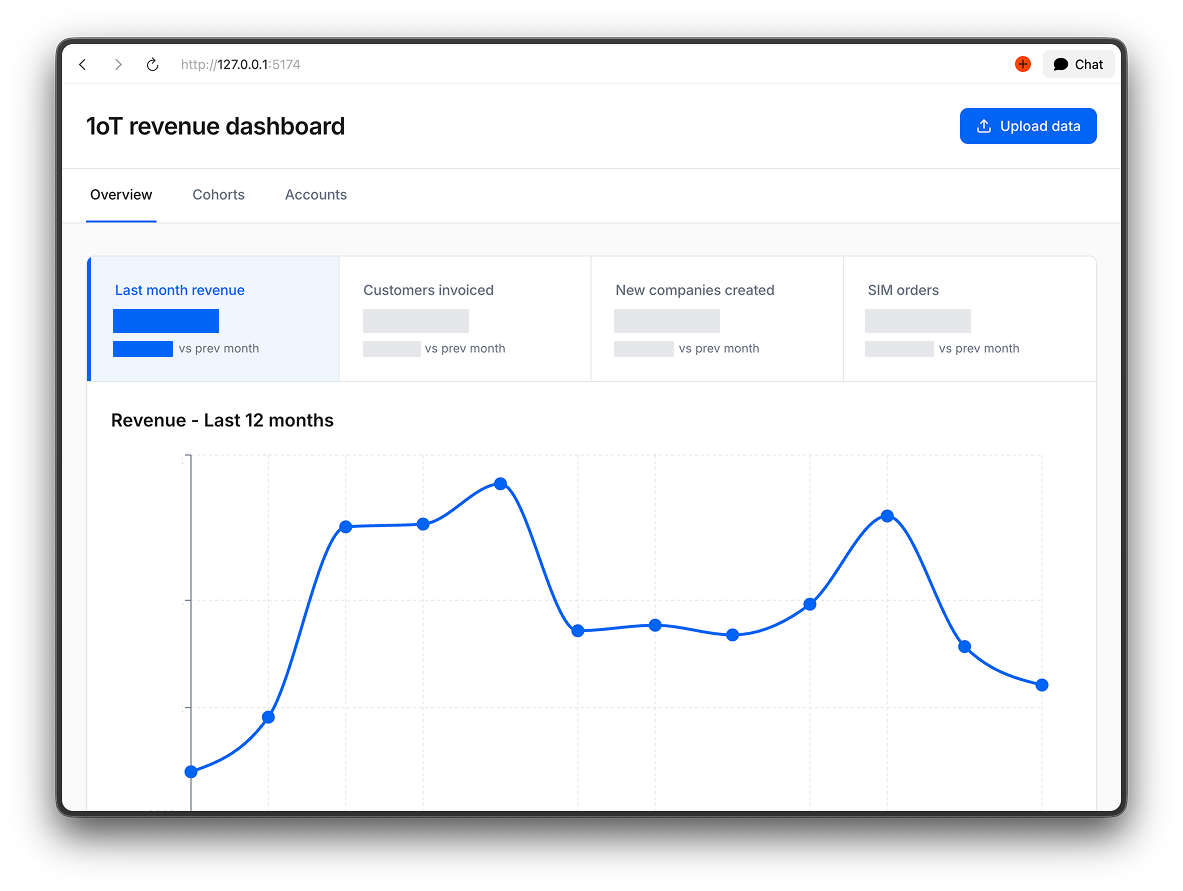
I built a revenue dashboard for 1oT, where I’m Chief Product Officer. We had direction but not verification. Gut said a customer was healthy, but we weren’t checking against the data. Cohort growth was something we believed in rather than something we could see. Monthly reviews meant hours in spreadsheets.
This would have been a project of requirements, prioritization and competing for engineering time. Instead I built it myself in an evening. Interactive charts, account health indicators, searchable tables, file uploads. Monthly review prep went from hours to minutes. “How is this customer doing?” now has an answer in thirty seconds.
None of this is impressive engineering. That’s the point.
Small tools that disappear into existing workflows.
Tools that slot into context, add no new dependencies, respect muscle memory. Success looks like invisibility. Tiny, unsexy pieces of software that co-exist, each solving one problem.
Many narrow wins beat one broad bet.
I tried a bigger approach last summer with Lovable to build an app called Zenkai.
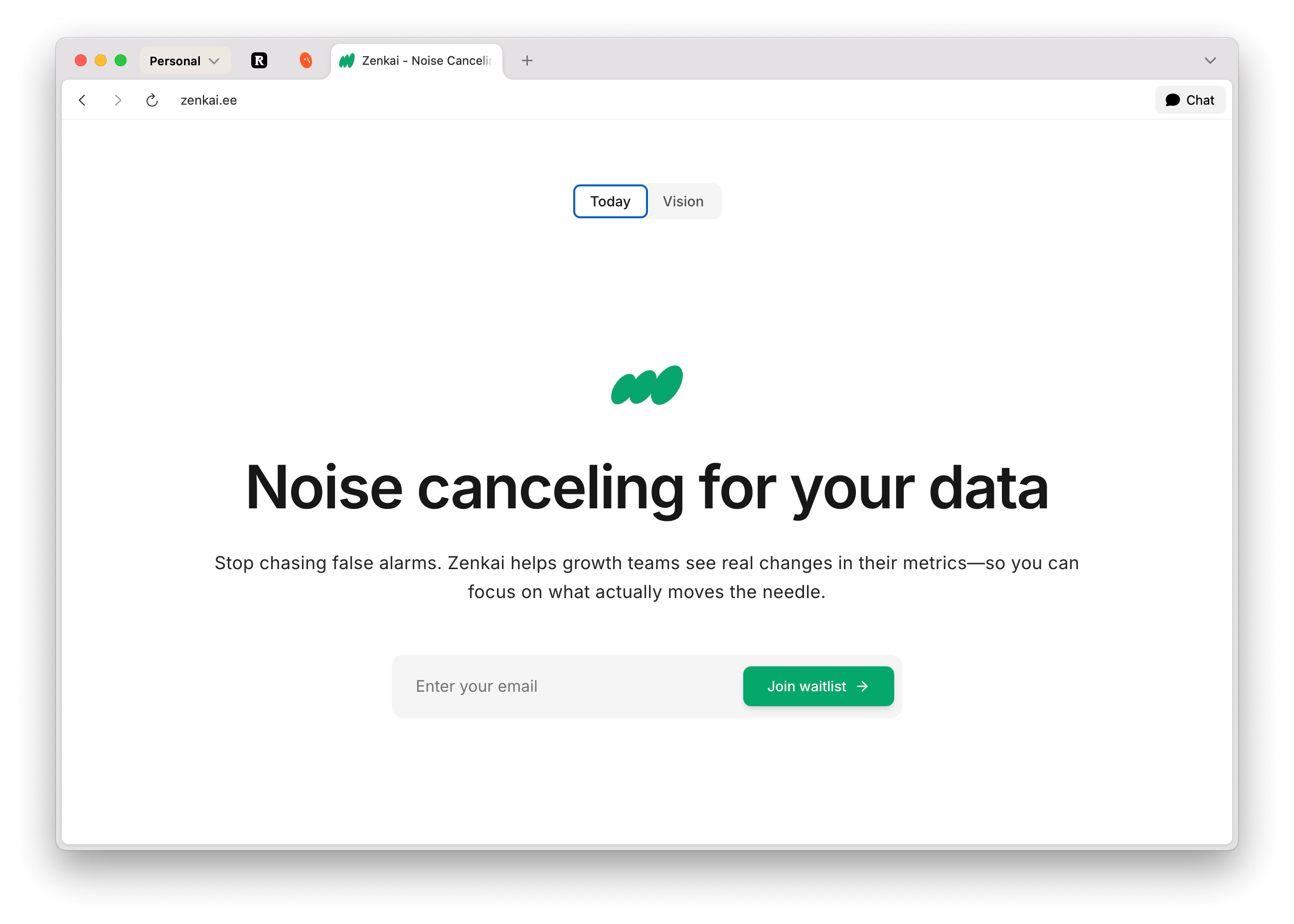
I had signups, people using the product. But without any engineering background, I had no idea how to proceed when things broke. The agent got stuck in unfixable bug loops. I’d describe the problem, it would attempt a fix, break something else, attempt another fix, break something else. I lost belief in the whole thing for four or five months.
What’s working now is the opposite: small tools, tight scope, immediate utility. A daily review skill. A dashboard for one company.
Tools democratize. Judgment doesn’t.
When AI tools become universally accessible, they eliminate competitive moats based on technical execution. Everyone can generate high-quality documents and designs using the same assistants. The tools stop being differentiators.
Competitive advantage shifts from what tools you use to what insights you generate and how you act on them.
My productivity system isn’t interesting because Claude maintains it. It’s interesting because it represents a system of thinking: commitments tracked, priorities visible, accountability externalized.
The dashboard isn’t interesting because I built it without engineers. It’s interesting because it answers the questions the team actually needs answered, shaped by years of understanding what matters in our business.
The tools execute. The judgment is still mine.
I’m a designer who never coded before LLMs. If you’re curious about practical AI use — not the hype, but what actually works day-to-day — this is what I’ve found:
Build small. Build for fit, not scale. Automate the maintenance so you can focus on the thinking.
Software for one is now possible. The question is what you’ll build.